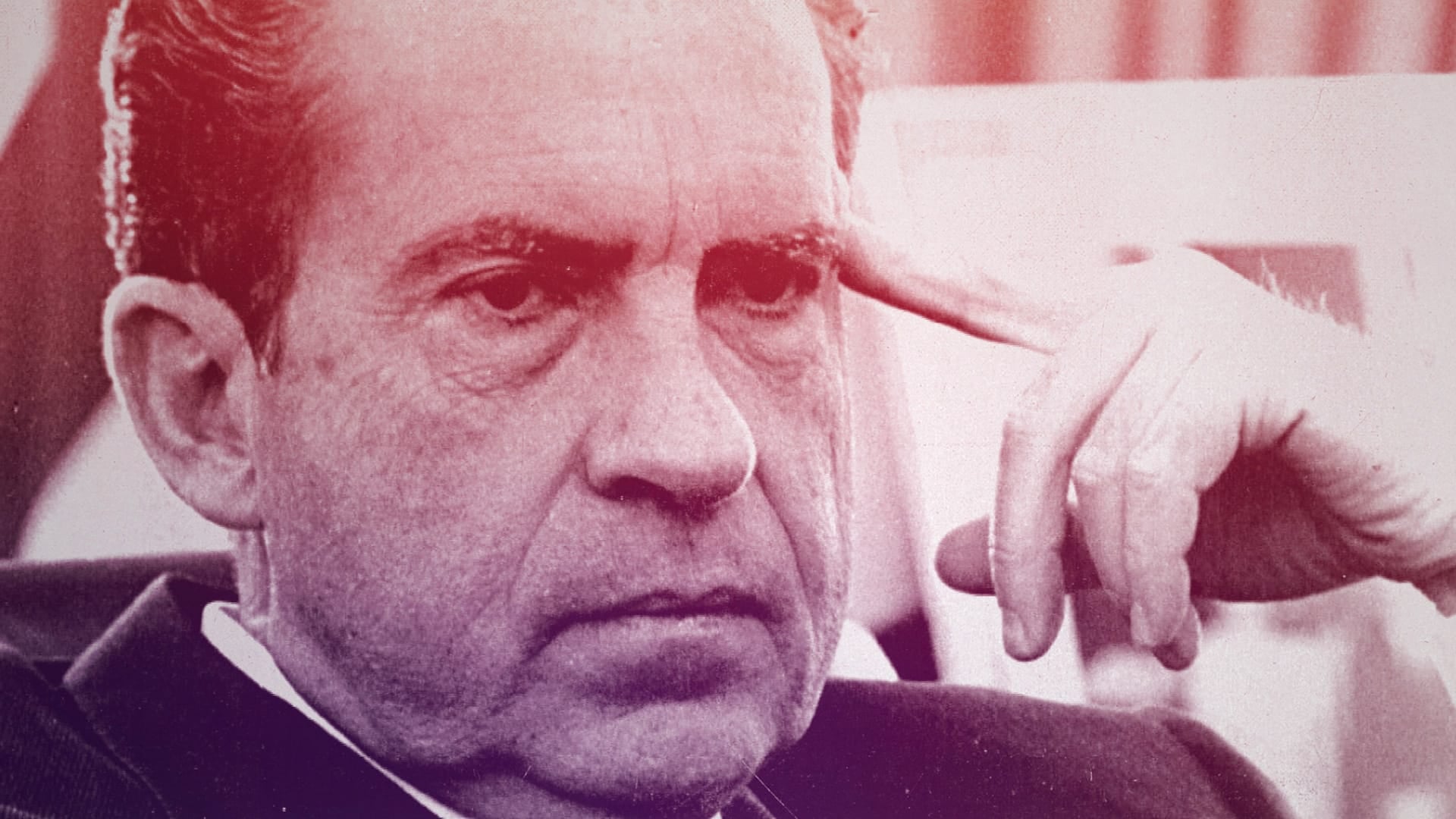
To understand the dramatic rise and unprecedented fall of Richard Nixon, one must look to his beginnings. Raised by a family with modest means in a childhood beset by tragedy, Richard Nixon learns early to recognize opportunity where he can and, perhaps more importantly, how to seize it. His years as a serious student give way to a promising political career. But Nixon’s meteoric rise is marked by aggressive political tactics, a resentment of the elite, and an unbridled will to win. His early political life climaxes with a dramatic showdown for the presidency against John F. Kennedy.
In a devastating defeat, Nixon loses one of the closest presidential elections in history to John F. Kennedy. Down but not out, Nixon soon runs for what should be an easily winnable governor’s seat in California, only to be again defeated and profoundly humiliated. Nixon retreats from politics for the first time in his life and takes a back seat to the tumult of the 1960s. In 1968, with a country in turmoil at home and abroad, Nixon senses an opportunity for a comeback. Determined to shed his loser’s image, he wages a calculated crusade for the presidency in one of the most dramatic and heart-wrenching elections to date.