Loading player...
Moguls & Movie Stars: A History of Hollywood
S1 E1- Peepshow Pioneers (1888-1907)
5.4
2010
1 Seasons
As America was transformed by the arrival of millions of immigrants in the 1890s, the first generation of American filmmakers joined with other innovators and entrepreneurs to create a bright new entertainment form that would transform the world. Thomas Edison perfected a device called the Kinetoscope that made pictures move, for one viewer at a time. In France, the brothers Auguste and Louis Lumière brought scenes of everyday life to the screen for a large audience, while the magician Georges Méliès created startling visual effects on film and Alice Guy Blaché became the first female film director. In the U.S., moviemaking in these early days was concentrated in New York, New Jersey and Chicago.
Seasons
Episodes
1. Peepshow Pioneers (1888-1907)
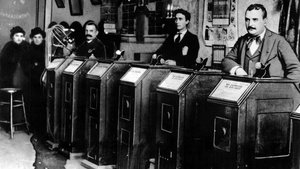
60mAs America was transformed by the arrival of millions of immigrants in the 1890s, the first generation of American filmmakers joined with other innovators and entrepreneurs to create a bright new entertainment form that would transform the world. Thomas Edison perfected a device called the Kinetoscope that made pictures move, for one viewer at a time. In France, the brothers Auguste and Louis Lumière brought scenes of everyday life to the screen for a large audience, while the magician Georges Méliès created startling visual effects on film and Alice Guy Blaché became the first female film director. In the U.S., moviemaking in these early days was concentrated in New York, New Jersey and Chicago.