The dialogues of Plato are analyzed in this program by Cambridge philosophy professor Miles Burnyeat. Seeing Plato's ideas initially as extensions of those of his teacher, Socrates, Burnyeat explains the development and content of Plato's original; doctrines of knowledge as virtue, the immortality and tripartite division of the soul, and the theory of forms (ideas). Plato's political philosophy is discussed within the context of the notion of the ideal state—a political utopia ruled by philosopher kings.
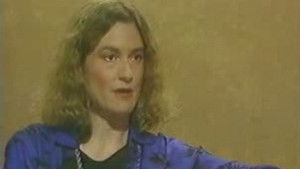
In this program, the far-reaching philosophical ideas of Plato's star pupil are examined by noted Brown University professor Martha Nussbaum. Aristotle overcomes Plato's dualism of the intelligible and sensible worlds with his principle of inseparable nature of eternal matter and form. The principles of potentiality and actuality are examined, along with Aristotle's theory of the four causes—material, formal, efficient, and final—which account for changes in all things. These theories of constancy and change are credited with the progress of scientific inquiry over the ages.